Nothing to do
The control system monitors temperature and process automatically and adjusts where needed. No daily round, no manual operation.
Movable · Modular · Circular
One movable container delivers the heat to warm your building and at the same time turns your organic residual streams into high-grade compost. No gas, no grid congestion, fully circular.
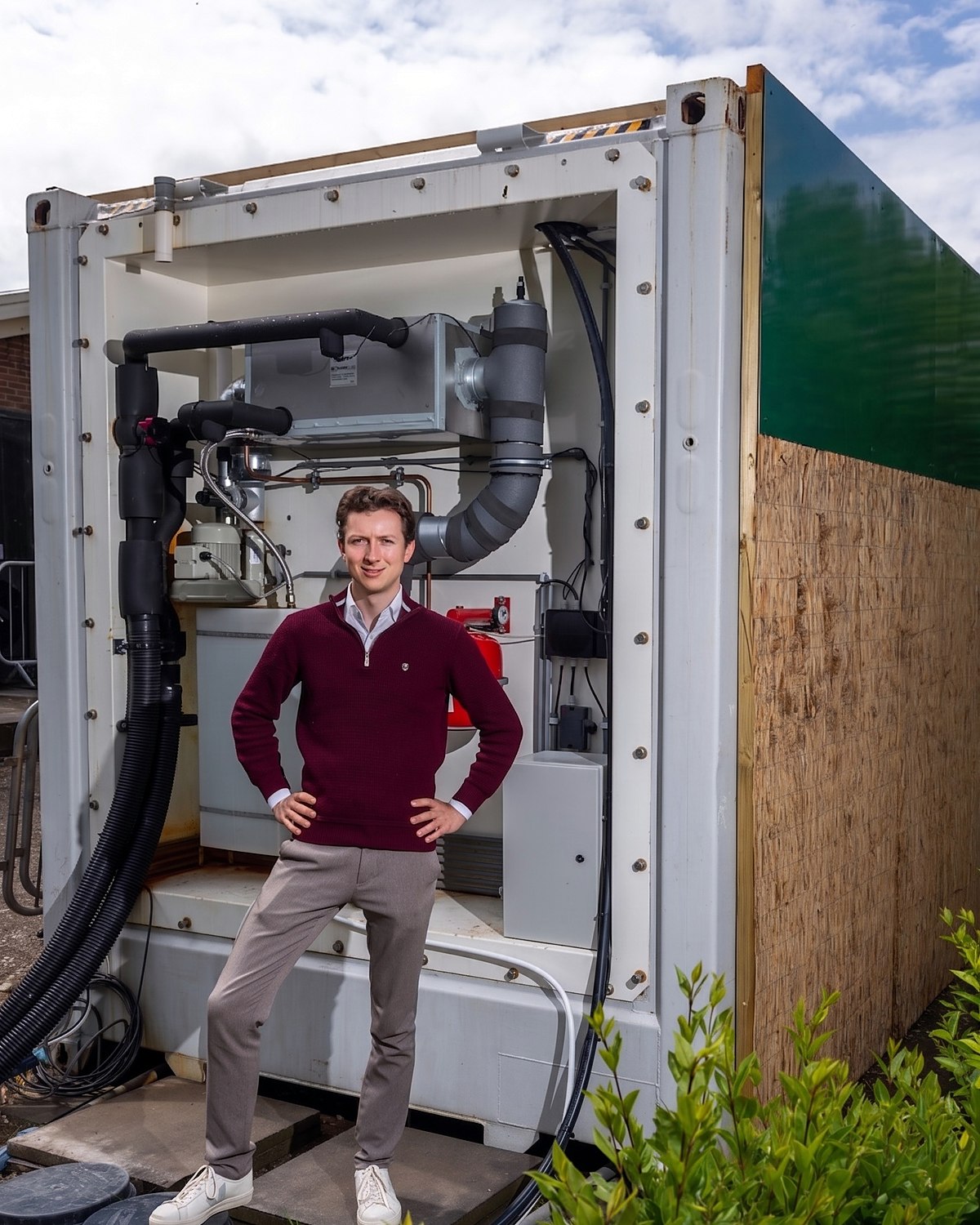
The system
Composting chamber, heat exchange, aeration and control are integrated into one 40ft high-cube container. Ready to use, with no permanent construction on your site.
What it costs you in work
The control system monitors temperature and process automatically and adjusts where needed. No daily round, no manual operation.
Compost out, new residual streams in. With a loader one person does that in half a day per system.
Who it is for
Calculate your saving
Fill in your situation for an indication of your annual saving and payback period. Every assumption is visible and adjustable.
Benefits
Deliver heat where electrification is not possible. No waiting for a grid upgrade, no dependence on gas prices.
Residual streams you currently take away become the source of heat and a valuable soil product. Nothing is lost.
No permanent construction or long permit process for an installation. The container stands where you need it and scales with you.
Controlled composting yields stable, nutrient-rich premium compost that is rich in micro-organisms. The long process makes it higher in quality than other kinds of compost.
A tangible story for your organisation. Waste, heat and soil in one closed loop on your own site.
From feasibility and siting through to commissioning and use, we think along with you about your particular situation.
Frequently asked questions
Is your question not here? Get in touch, we are glad to think along about your situation.
You need 30 m² for one system. Systems can be placed side by side and linked, depending on your heat demand. We look at the best spot on your site together.
Crop residues, green waste, verge cuttings and manure, among others. During the advisory call we look at which streams you have available and what the best mix is.
Little. The system runs itself. The control monitors temperature and process automatically, so you do not have to check daily and nobody has to be freed up for it. Two to six times a year you take the compost out and new residual streams go in. With a loader that is half a day of work for one person, per system.
The process is steered precisely from a distance. That lets you set the system to a cycle of one month to six months, depending on the size of your residual streams and your demand for heat and compost.
No. The system delivers heat without a gas connection and without a heavy electrical connection. Four systems together run off one ordinary socket. That keeps the installation simple and means it also works at sites where grid congestion rules other systems out.
A system is a tailored investment, depending on your heat demand and residual streams. After a short advisory call we put together a fitting proposal. You can already make a trial calculation on our website under “Calculate”.
Advisory call
Curious whether a compost heating system would add value for your business? Leave your details and we will get in touch for a no-obligation conversation about your heat demand and residual streams.